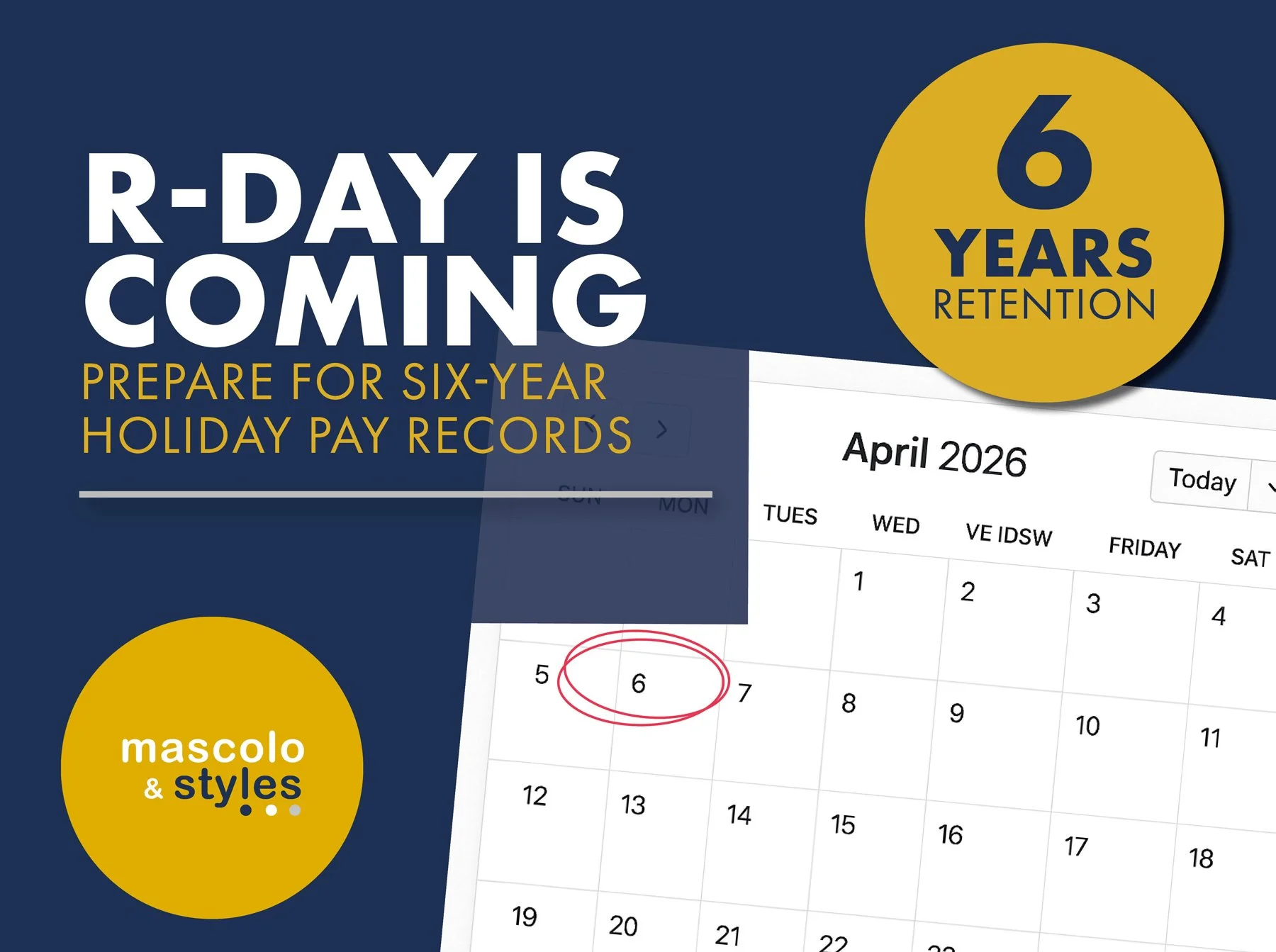
R-Day Is Coming: Why Employers Must Prepare for Six-Year Holiday Pay Records
From 6 April 2026, UK employers face a significant shift in payroll compliance. Under the Employment Rights Bill, businesses will be required to retain holiday pay and annual leave records for a minimum of six years.
For many organisations, this marks a change not just in retention periods, but in how payroll and HR systems need to operate day to day. The message is simple: April 6, 2026 is “R-Day” - Records Day.
What’s Changing?
The new rules bring holiday pay record-keeping into line with National Minimum Wage (NMW) requirements. From April 2026:
Six-Year Retention Becomes Mandatory
All holiday pay and annual leave records must be kept for at least six years. This applies even after an employee leaves the business.
New Enforcement Authority
Responsibility for enforcement will move from HMRC to the newly established Fair Work Agency (FWA), which will oversee compliance in this area.
Detailed Documentation Required
Employers must hold and be able to produce detailed records covering:
Statutory annual leave taken
Holiday pay calculations
Hours worked
Variable elements of pay such as overtime, commission, and bonuses
It will no longer be enough to show that holiday pay was processed. Employers must be able to demonstrate clearly how it was calculated, particularly where pay fluctuates.
Why This Matters
Holiday pay has long been a complex area of employment law. Case law has expanded what counts as “normal remuneration,” meaning overtime, commission and certain bonuses often need to be included in holiday pay calculations.
By extending record-keeping requirements to six years and strengthening enforcement through the Fair Work Agency, the government is signalling that documentation must properly support those calculations.
Sharna Styles, Payroll Manager at Mascolo & Styles, comments:
“Holiday pay is one of the most misunderstood areas of payroll. It’s not just about recording that someone took leave, it’s about being able to evidence exactly how their pay was calculated, especially where commission or overtime is involved. With the six-year retention requirement coming in, employers need systems that can stand up to scrutiny. Waiting until an audit happens is simply too late.”
Failure to maintain adequate records could trigger audits, financial penalties, and potential disputes that are difficult to defend without clear evidence.
How This Fits with Existing Payroll Rules
Employers already operate under different retention requirements depending on the type of record:
PAYE records: Generally retained for three years from the end of the relevant tax year, covering wages, deductions and tax reporting.
National Minimum Wage records: Must be kept for at least six years from the end of the pay reference period.
Pension records: Typically retained for six years after the end of the relevant tax year.
The new holiday pay requirements bring leave records into line with the longer six-year standard applied elsewhere.
Practical Steps to Take Now
April 2026 is fast approaching, employers should act before the deadline.
1. Conduct a joint HR and payroll audit
Holiday data often sits in HR systems, while calculations sit in payroll software. These functions need to align.
2. Review how holiday pay is calculated
Check how variable pay, overtime and commission are factored into holiday pay. Make sure calculations are consistent and defensible.
3. Upgrade or configure systems for long-term storage
Electronic storage with secure backup is essential. Records must be easily retrievable for six years.
4. Create clear documentation procedures
Ensure there is a documented process explaining how leave and holiday pay are recorded and calculated. This helps demonstrate compliance during any inspection.
A Clear Compliance Shift
For many employers, holiday records have historically been treated as operational rather than compliance-critical. That approach will no longer be sufficient.
R-Day represents a clear shift. Holiday pay documentation is moving into the same compliance category as minimum wage and pension obligations. Businesses that prepare early will reduce risk, avoid disruption and strengthen their payroll governance.
If you haven’t reviewed your holiday pay record-keeping processes recently, now is the time to start. April 6, 2026 will arrive quickly, and by then, your systems should already be ready.