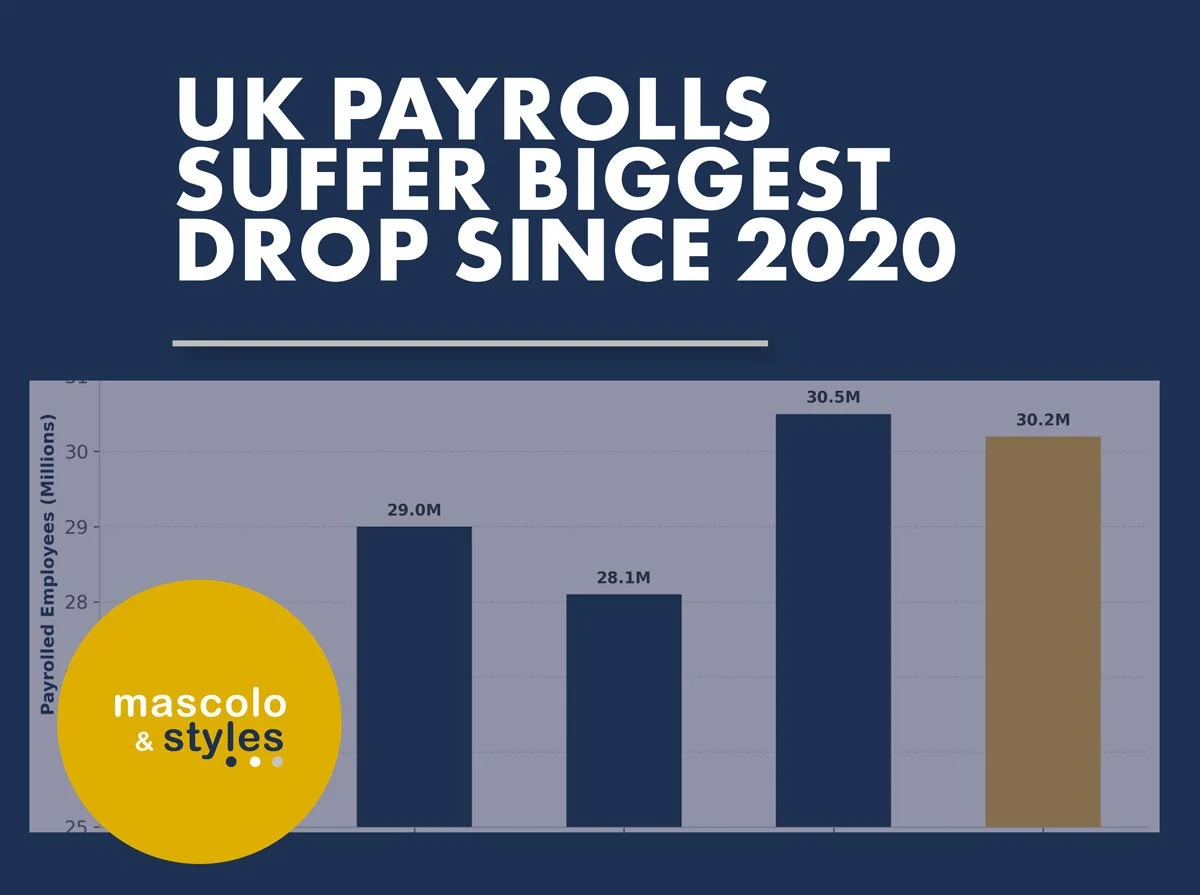
UK Payrolls Suffer Biggest Drop Since 2020
The UK labour market has recorded its sharpest contraction in over five years. Newly released figures reveal that the number of payrolled employees has fallen at a rate not seen since the height of the COVID-19 pandemic in 2020. Economists point to the compounding, severe disruptions of ongoing global conflicts as a primary driver behind the sudden chill in hiring.
According to data jointly released by HM Revenue and Customs (HMRC) and the Office for National Statistics (ONS), the number of payrolled workers in the UK plummeted by 100,000 in a single month.
A Sharp Year-on-Year Decline
The monthly collapse is part of a broader, deeper cooling trend in the British economy. Total payrolled employment fell to 30.2 million. This represents a 0.7% decrease compared to the same time last year, meaning there are 210,000 fewer people on company payrolls than 12 months ago.
While the ONS routinely cautions that early monthly data is provisional and subject to statistical revisions, the sheer scale of the drop has sent clear warning signs across the financial sector. The downward trajectory marks a definitive end to the post-pandemic jobs recovery, as annual employee growth rates have steadily decelerated since their peak in 2022.

Industry Winners and Losers
The pain of the economic slowdown is not being felt equally across the board. High-street businesses and consumer-facing sectors are bearing the brunt of the downturn, while public-sector healthcare remains a rare area of growth.
· Wholesale and Retail: Hit hardest by the squeeze, shedding a massive 76,000 employees over the past year as inflation and supply chain shocks drag down consumer spending.
· Health and Social Work: Countered the broader trend, adding 24,000 employees to its payrolls over the same 12-month period.
The massive loss of 76,000 jobs in the wholesale and retail sector, as highlighted in the May 2026 ONS report, reflects a perfect storm of intense pressure on the UK high street.
While the ONS tracking measures the raw numbers of people falling off payrolls, market analysts, business surveys, and economists point to a few specific, interconnected factors that drove this retail slowdown.
1. Spiking Operating Costs (The Middle East Conflict)
The ongoing conflict involving Iran has reverberated directly into the retail supply chain. The war triggered sudden spikes in international oil and gas prices, which hit retailers on two fronts:
Logistics & Freight: Shipping and transporting goods became significantly more expensive due to higher fuel costs.
Store Overheads: Retailers faced higher utility bills to keep bricks-and-mortar storefronts heated and lit.
Facing these massive increases in input costs, many businesses transitioned from a growth mindset to survival mode, actively freezing recruitment or downsizing payrolls to protect their margins.
2. High Payroll Taxes and Labor Regulations
In business surveys leading up to the report, employers consistently voiced frustration over rising domestic pressures. The combination of higher payroll taxes and newly implemented government labour reforms, designed to give workers stronger day-to-day employment rights, made keeping and hiring staff notably more expensive. For lower-paying, lower-margin industries like retail and hospitality, these legislative shifts created a direct incentive to reduce headcounts.
3. Stagnating Household Disposable Income
British consumers simply have less money to spend on the high street. The energy shocks caused by the geopolitical climate have pushed projected UK inflation back up toward 3% to 3.5%, eroding any recent wage gains.
According to data from groups like the Joseph Rowntree Foundation, real household disposable incomes have completely stagnated in early 2026. Because shoppers are pouring more of their pay checks into non-negotiable living costs (like food, heating, and housing), non-essential retail sales have dropped significantly, forcing stores to cut back on floor staff.
4. Aggressive Focus on Cost Management over Growth
With corporate confidence sitting near historic lows, major retailers have aggressively shifted their priorities. Instead of expanding store footprints or rolling out new locations, corporate strategies are locked onto strict cost management. When retail workers left their jobs voluntarily in early 2026, companies frequently chose to leave those vacancies unfilled, allowing payroll numbers to steadily bleed out.
The Big Picture: The 76,000 decline underscores retail's position as a highly cyclical industry. When global conflicts squeeze energy markets and domestic policies raise employment costs, the retail sector is almost always the first to contract.
Pay Growth Fails to Keep Pace
For the workers who remain employed, the pace of wage growth is also beginning to lose its momentum. Median monthly pay rose to £2,627, marking an annual growth rate of 4.9%.
While a 4.9% increase is substantial by historical standards, it shows a noticeable deceleration from the stable 6.0% wage growth recorded throughout the previous two years. The slowing pay growth suggests that employers, facing soaring operational costs and geopolitical uncertainty, are pulling back on aggressive wage hikes to preserve capital. By sector, the highest wage growth was seen in health and social work (6.8%), while the financial and insurance sectors lagged far behind at just 3.1%.
War Impact Echoes Through the High Street
Market analysts suggest the sudden drop in payrolls is heavily tied to the "war impact" tearing through international supply networks and energy markets. With businesses facing unpredictable overhead costs and diminished consumer confidence, many firms have shifted from expansion to survival mode, pausing recruitment campaigns or actively downsizing their staff.
As the UK navigates this challenging economic landscape, policy makers will be watching upcoming revisions closely to see if the 100,000 payroll drop is a temporary blip or the start of a prolonged recessionary trend in the British workforce.
Source: ONS